Solar Panel Maintenance in Andhra Pradesh’s Climate: A Season-by-Season Checklist
5 August 20265 min readBy S Hima Shankar
- AMC
- Maintenance
- Monsoon
- Panel Cleaning
Coastal dust, monsoon runoff, and summer heat all affect panel output differently. Here’s how to keep a rooftop system performing at its rated capacity year-round.
A rooftop solar system has no moving parts, which is exactly why people assume it needs no attention at all. It mostly doesn’t — but Andhra Pradesh’s climate throws a specific combination of dust, humidity, and monsoon runoff at panels that flatter, drier climates don’t deal with, and ignoring it quietly costs you generation output long before anything actually breaks.
Why This Climate Is Tougher on Panels Than You’d Think
Coastal and semi-coastal areas across the state deal with salt-laden air, agricultural dust drifting in from surrounding farmland, and a monsoon season concentrated enough that runoff patterns matter. None of this damages panels outright, but a dust or grime layer as thin as you’d barely notice by eye can measurably cut output — often 5–10% before it looks “dirty enough” to bother about.
Summer (March–June): Dust and Heat
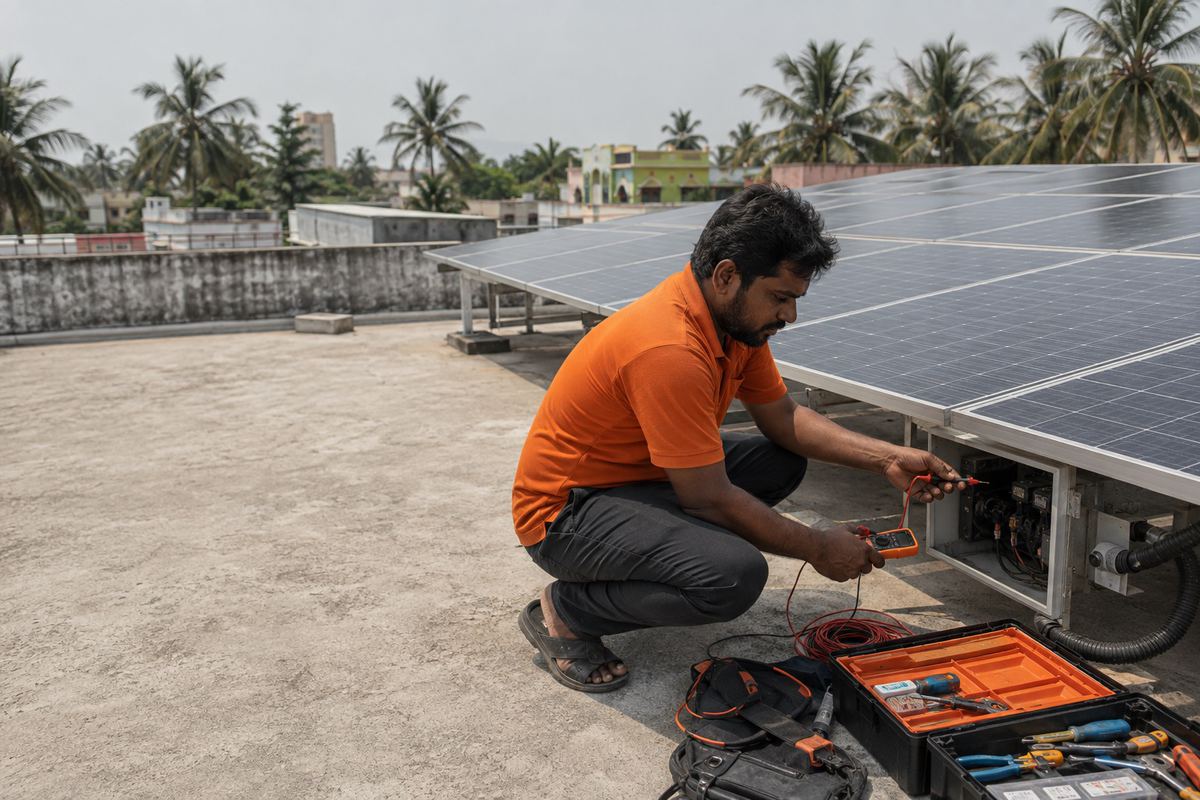
This is the highest-generation season and also the dustiest. Panels should be cleaned roughly every 3–4 weeks during summer — plain water and a soft cloth or squeegee, ideally early morning before the surface heats up, since cleaning hot glass with cold water can cause thermal stress over time.
Monsoon (July–September): Runoff, Not Just Rain
Rain does clean panels to some extent, but it also washes dust into streaky deposits at the lower edge of each panel and around mounting brackets, and heavy runoff can loosen debris around the racking. This is the season to schedule a structural check — mounting bolts, earthing connections, and cable entry points — alongside the usual cleaning, rather than assuming the rain is doing all the work for you.
Winter (October–February): The Easiest Season, With One Catch
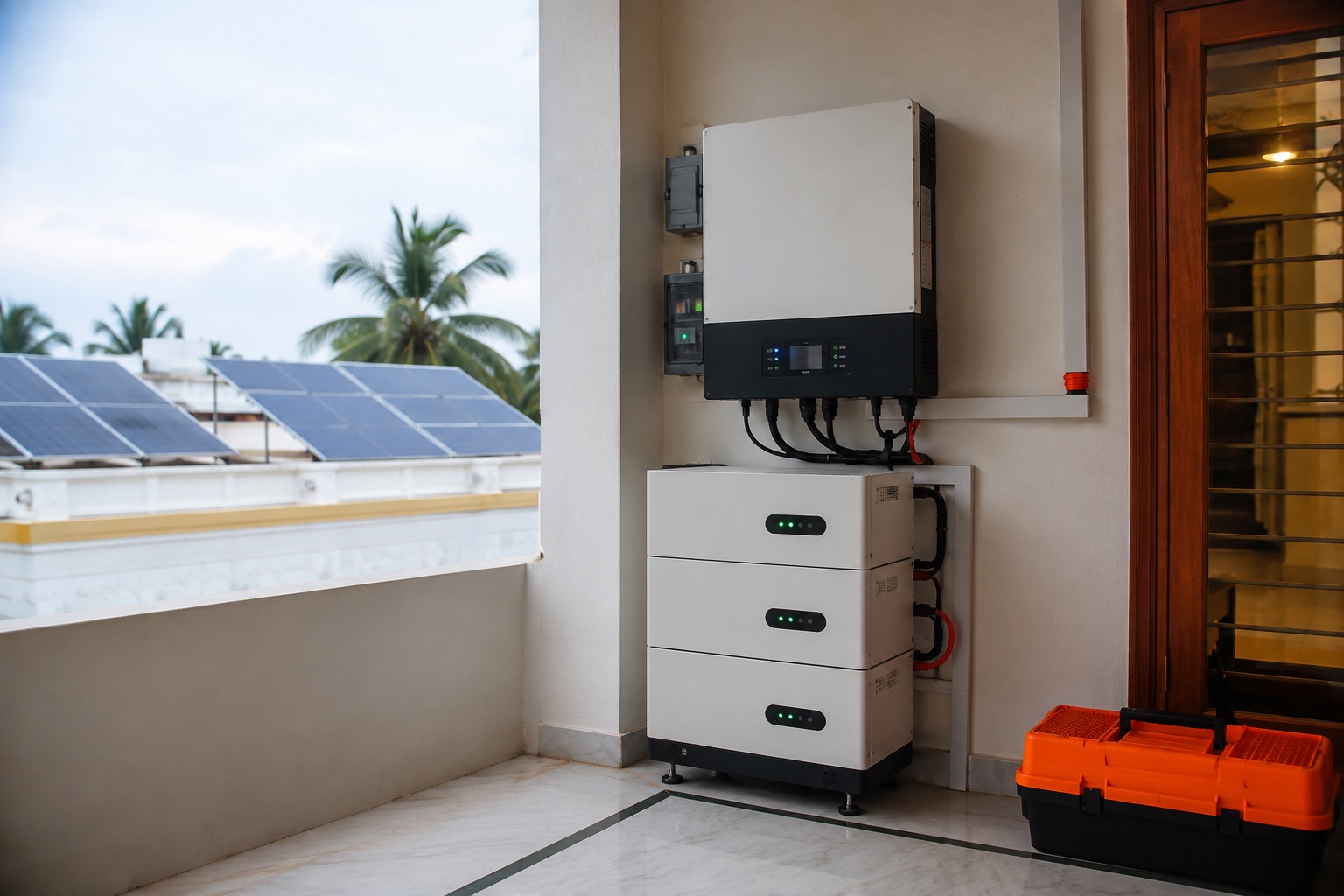
Generation is more stable and dust accumulates slower, so cleaning can drop to roughly once every 6 weeks. The one thing worth checking is inverter ventilation — cooler mornings mean condensation can build up in poorly ventilated inverter enclosures, so a quick visual check for moisture is worth it a few times through the season.
A Simple Cleaning Schedule
- Summer: every 3–4 weeks
- Monsoon: after major runoff events, plus a structural check
- Winter: every 5–6 weeks
- Any season: immediately after dust storms or bird activity leaves visible buildup
What’s Covered Under Warranty vs. What Isn’t
Panels carry a 25-year performance warranty and inverters a 10-year warranty against manufacturing defects and abnormal degradation — but routine cleaning and general upkeep sit outside that coverage, the same way a car’s engine warranty doesn’t cover oil changes. Our AMC plans exist specifically for that gap: scheduled cleaning, structural checks, and inverter inspections on the cadence above, so you’re not tracking it manually.